
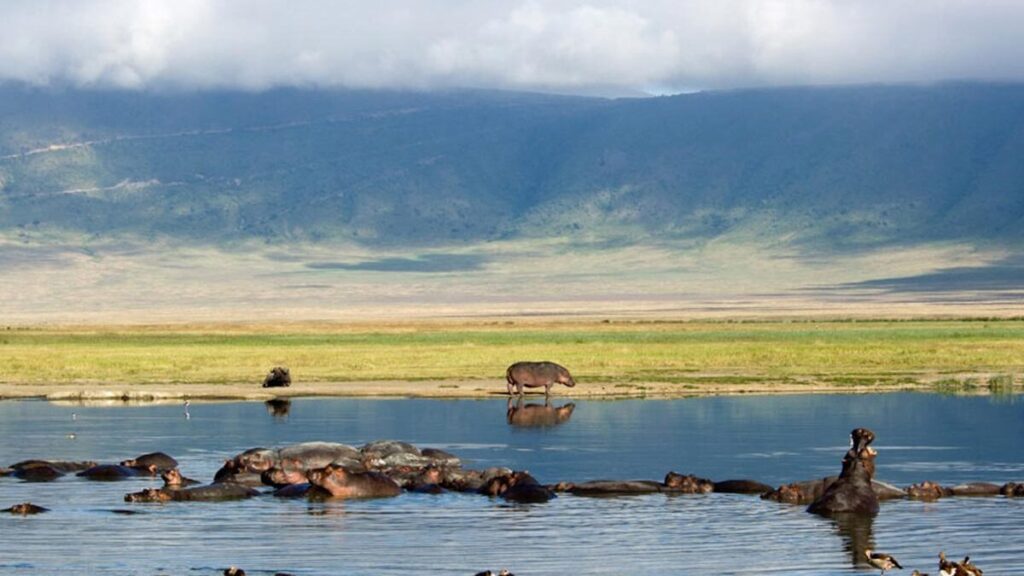
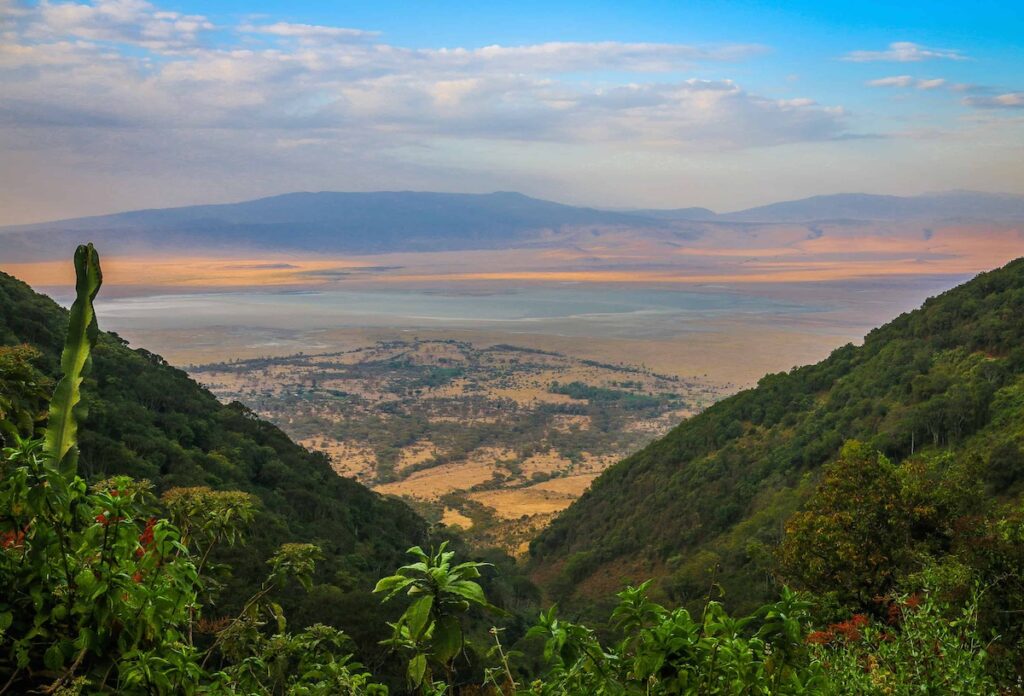
The Ngorongoro Conservation Area covers a broad highland landscape where volcanic peaks, open grasslands, forests, and deep valleys form one of East Africa’s most envied attraction. At its center lies the Ngorongoro Crater, measuring about 260 square kilometers and holding a permanent concentration of roughly 25,000 large animals. The crater floor supports grazing lands, freshwater springs, a seasonal lake, and pockets of woodland that allow wildlife to remain throughout the year.
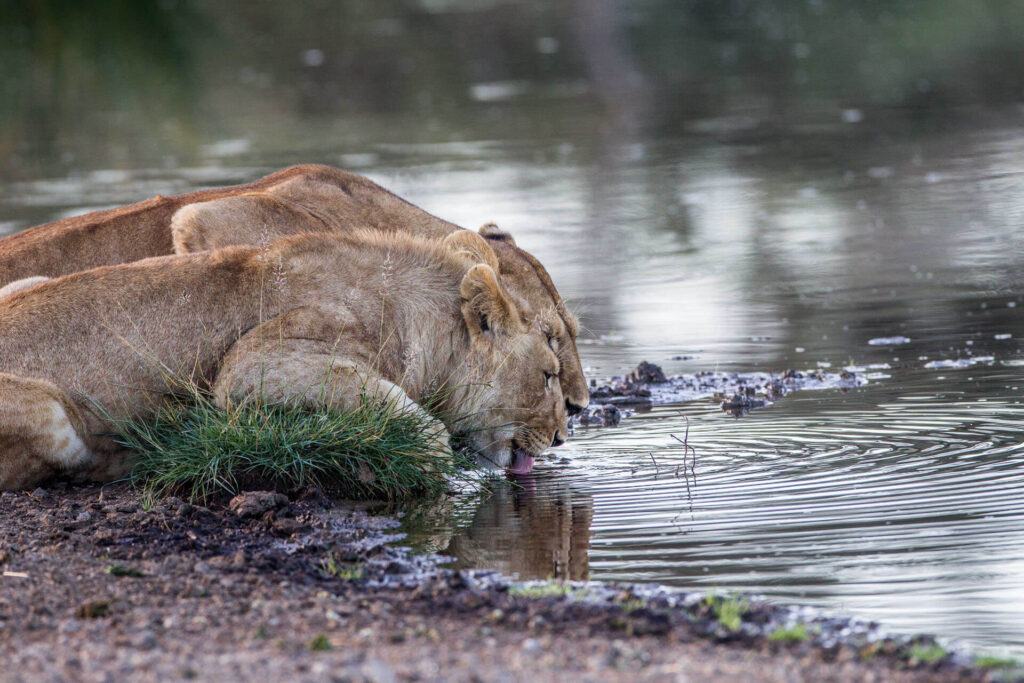
The crater floor is teeming with wildlife, making it a prime destination for safari enthusiasts. You can observe almost every species of big game, including zebras, wildebeests, black rhinos, antelopes, giraffes, buffaloes, lions, cheetahs, leopards, and numerous monkeys.
Notably, the crater hosts many large bull elephants, although female breeding elephants are less common due to the steep crater walls. Bird watchers will find a paradise here, with thousands of flamingos inhabiting Lake Magadi’s shallows and hundreds of other bird species throughout the area.
The Ngorongoro Crater, the world’s largest intact volcanic caldera, is a breathtaking geological wonder.
With a depth of 610 meters, a diameter of 16 kilometers, and covering a surface area of 540 square kilometers, the crater is a stunning sight to behold.
This natural amphitheater is a UNESCO World Heritage Site and one of Africa’s most significant natural landmarks
Olduvai Gorge, one of the most important prehistoric sites in the world. This site gained fame through the discoveries of the Leakey family, who uncovered a 1.8 million-year-old hominid skeleton, offering invaluable insights into early human evolution.
The region is also part of the long-standing homeland of the Maasai, whose grazing traditions continue under regulated access, maintaining a cultural landscape that still reflects pastoral life in the highlands.
Need help? Our team is just a message away