
Lake Manyara National Park is located at about 125 kilometers from Arusha and covers roughly 330 km2, with nearly two thirds occupied by the alkaline lake that defines its ecology. The park is characterized by the steep wall of the Great Rift Valley to the west and a mix of groundwater forest, floodplains, and acacia woodland toward the lakeshore.
Water levels shift with the seasons, drawing large numbers of flamingos and other waterbirds to the shallows. Manyara’s compact area and varied habitats support a broad range of wildlife within a relatively small area, making it one of northern Tanzania’s most accessible wildlife haven.
Lake Manyara is best known for its tree climbing lions, a feature recorded periodically along the woodland edge, and for the Maasai giraffe populations that move between the park different sections.
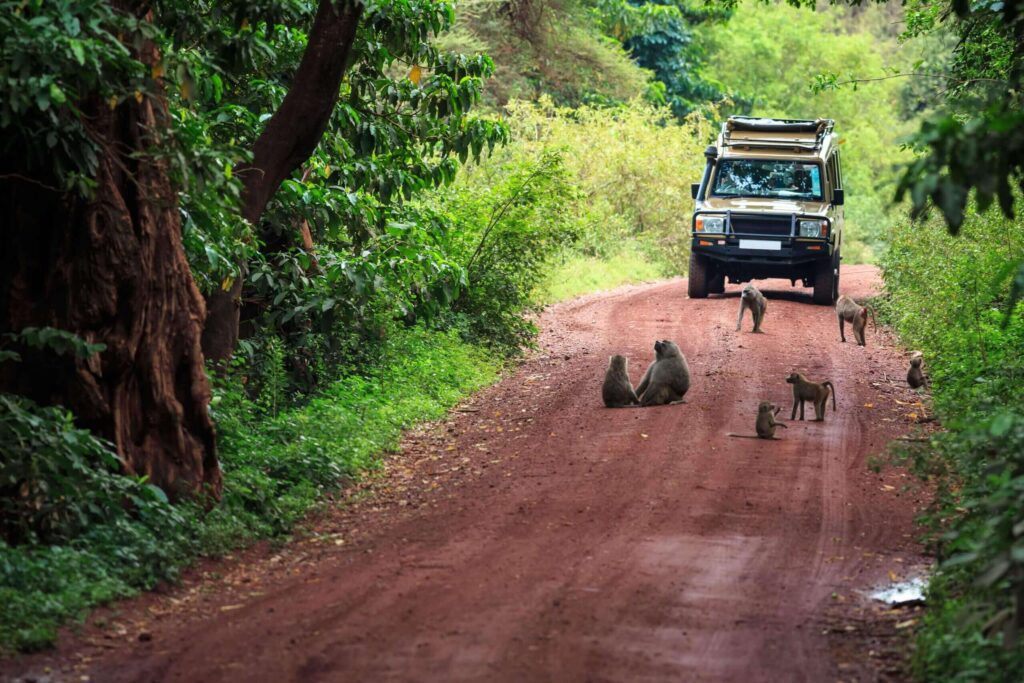
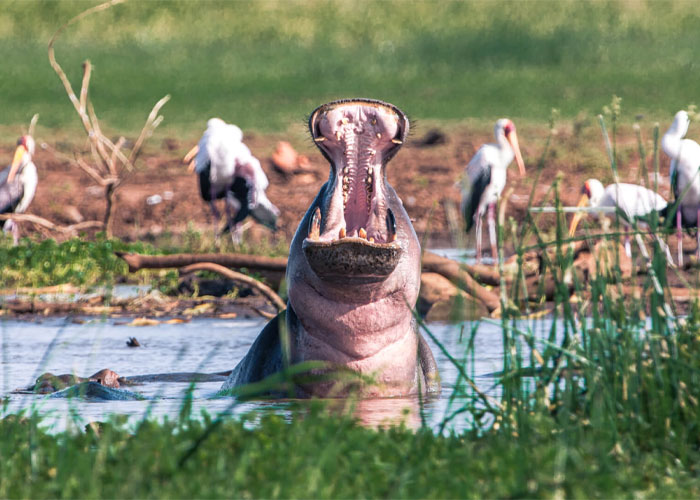
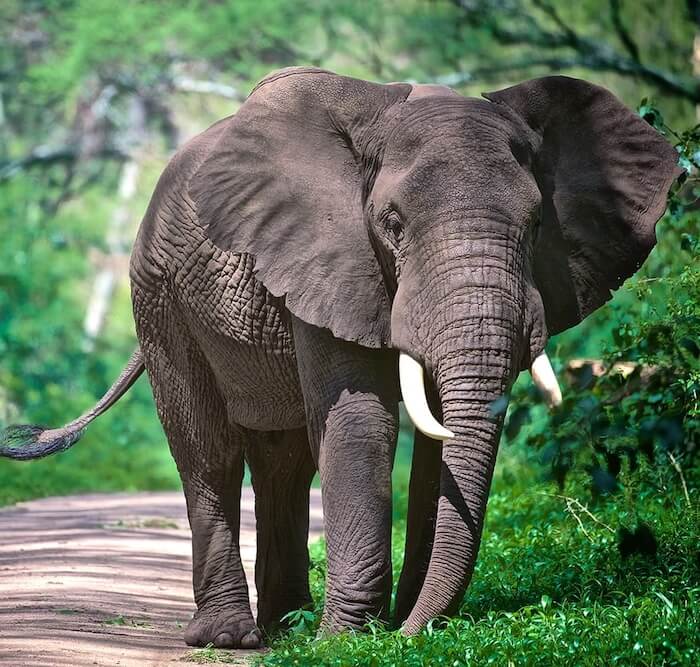
The lake is a hub for flamingos in fluctuating numbers, along with pelicans, storks, and other species that form part of a bird list of more than 400 recorded varieties. Elephants, buffalo, hippos, and a range of antelope rely on groundwater areas and forest, with troops of olive baboons creating one of the highest primate densities in the region.
The town of Mto wa Mbu borders the park and offers a close look at small scale farming, local markets, and community guided walks that show how different groups have settled and adapted around the Rift Valley corridor.
Need help? Our team is just a message away