
Serengeti Wildebeest Migration
Come as a tourist, Explore like a Local.
Serengeti – a name that evokes images of endless and untouched wilderness, holds its legendary status due to the annual migration of over 2.5 million animals, including up to 1.5 million wildebeest. This 800km migration is the largest wildelife migration on Earth, and a spectacle far from the typical. Sweeping across the Serengeti plains and into the Masai Mara, the migration is inspired by seasonal variations in grass growth and nutrient content availability. Alongside them, herds of zebras, elephants, giraffes, and other herbivores follow the rains, exploiting each area when the grasses are at their peak.
The river crossings are the battlegrounds for survival, making this the most fascinating display of nature’s raw intensity. With predators like lions, this natural drama come into display on an awe-inspiring scale. At the heart of this spectacle, you’ll witness up to 1.5 million wildebeest, their survival constantly at stake, as nature’s relentless cycle plays out in raw and unforgettable fashion.
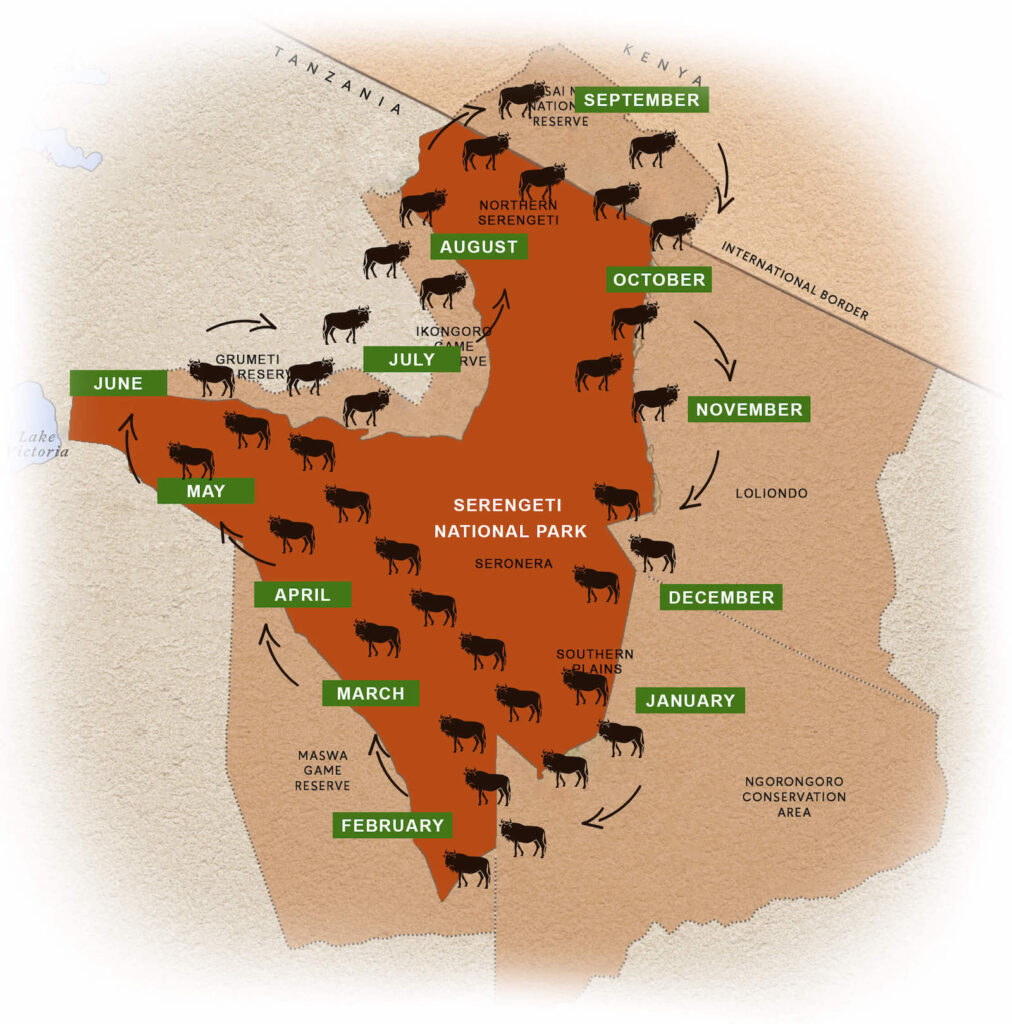
The Migration Timeline
Here’s a breakdown of the migration cycle, intended to provide you with accurate insights into the best times for a safari adventure.
January to March (Wet Season)
These months bring the calving season in the southern Serengeti plains and the Ndutu region, with thousands of newborn wildebeest.
Predators like lions, cheetahs, and hyenas thrive during this period, making it an ideal time for witnessing life and death unfold in a dramatic setting.
April to June (Long Rains to Early Dry Season)
The herds begin their long marathon northwest, heading toward the Western Corridor of the Serengeti.
River crossings become more frequent, especially at the Grumeti River, where crocodiles lie in wait. This period offers a prime opportunity for witnessing the challenges faced by the herds.
October to December (Short Rains)
As the short rains begin, the herds gradually return southward, following the regrowth of fresh grass in the central and southern Serengeti.
The herds spread out, but the beauty of the migration remains as they replenish and prepare for the next cycle.
July to September (Dry Season)
The Mara River crossings take place as the herds push toward the northern Serengeti and Masai Mara. This time of year, brings intense predator action and incredible viewing opportunities.
The risk of dramatic river crossings makes it one of the most sought-after periods for adventurers.